There is something quietly profound about the objects we choose to wear every day. Unlike clothing, which changes with the seasons, or accessories chosen for a single occasion, a watch or a ring occupies a different category entirely. These are items worn close to the body, often for years or decades, sometimes for a lifetime. They accumulate meaning as they accumulate time, carrying memories, milestones, and a kind of silent autobiography that words rarely manage to fully capture.
In an era dominated by digital screens and disposable fashion cycles, there has been a quiet but unmistakable return to objects built to last. Consumers are reconsidering the value of craftsmanship, heritage, and intentionality. They want things that mean something. This shift has made the jewelry and watch industries particularly interesting spaces to observe, because both sit at the intersection of functional design and deep personal symbolism.
This piece explores those themes through two lenses: the enduring appeal of precision watchmaking rooted in decades-old design, and the timeless significance of the wedding ring as both a physical object and an emotional commitment.
Why Design That Survives Decades Earns Our Trust
The watch world is full of references, revivals, and reissues. Yet not all of them land with the same sense of authenticity. There is a meaningful difference between a brand reaching back into its archive for inspiration and a brand genuinely reviving a design that was ahead of its time when it first appeared.
The late 1970s were a turbulent period for mechanical and quartz watchmaking alike. The so-called quartz crisis reshaped the Swiss industry dramatically, but it also produced some genuinely bold design work as manufacturers tried new directions. Integrated bracelet designs, where the watch case and metal bracelet form a single continuous silhouette rather than separate components, became a hallmark of that era. Clean, architectural, precise, these watches looked like nothing that had come before them.
When such a design is revived with care and modern manufacturing capabilities, something interesting happens. A younger generation encounters it fresh, without nostalgia, and judges it purely on its merits. Meanwhile, those who remember the original feel a different kind of pleasure, the recognition of something worth preserving. Good design, it turns out, does not have an expiration date.
The Tissot PRX is a compelling example of exactly this dynamic. Originally introduced in 1978, the model was rooted in the integrated-bracelet aesthetic that defined that decade’s most daring designs. When Tissot brought it back in updated form, the response from the watch community was significant, not because of marketing, but because the design itself still held up. The proportions were right. The relationship between case and bracelet remained elegant. The price point made quality Swiss craftsmanship accessible to a wider audience without compromise. For authorized retailers across Europe, stocking the Tissot PRX became a way of offering customers something with genuine design lineage rather than a newly invented heritage.
The Quiet Revolution in Materials and Movement
One of the more underappreciated aspects of contemporary Swiss watchmaking is how much improvement has happened beneath the surface, not in terms of complication or complication-count, but in core reliability.
The Powermatic 80 movement, used in several modern automatic watch variants, is a useful illustration. An 80-hour power reserve may not sound dramatic, but it has a genuinely practical effect: wearing your watch on a Friday means it is still running accurately when you reach for it on Monday morning. Combined with a Nivachron balance spring, which is anti-magnetic and particularly resistant to the magnetic fields emitted by modern electronic devices, these are not features that show up in photographs. They are features you notice over years of ownership.
Similarly, sapphire crystal glass, which resists scratching to a degree that mineral glass simply cannot, changes the long-term relationship between owner and watch. A watch that still looks pristine after years of wear is a watch its owner keeps. It becomes part of the daily routine, and then part of the personal story.
Water resistance to 100 meters is another quiet gift. It transforms a watch from a delicate object that must be removed before any encounter with water into something you simply wear, without thinking about it, in the rain, while washing dishes, while swimming in the sea. The reduction in anxiety around a cherished object is itself a form of value.
What a Watch Communicates Without Saying Anything
We live in an era of constant digital communication, yet some of the most powerful personal statements are still made through physical objects rather than words. A watch, worn on the wrist, visible in every handshake and every gesture, communicates something about the wearer’s relationship with time, with craft, with taste.
There is sociological literature on the subject, but most watch enthusiasts would simply describe it in more personal terms. A watch you chose carefully, that represents a design tradition you admire, that functions reliably and looks right on your wrist, becomes almost invisible in the best possible sense. It is simply there, part of who you are.
This is also why the choice of where to buy a watch matters more than it might initially seem. Purchasing from an authorized dealer is not merely about warranty and service access, significant as those are. It is about entering a relationship with a brand and a retailer who share a stake in that object’s long-term life on your wrist. Customer service, expert advice, the ability to compare models in person across physical stores, these dimensions of the buying experience shape the ownership experience that follows.
From Precision to Permanence: The Different Language of Rings
If a watch is about how we navigate time, a ring is about how we mark it. The two objects occupy different emotional registers, though both are worn daily, both require quality materials to endure, and both carry weight that goes far beyond their physical presence.
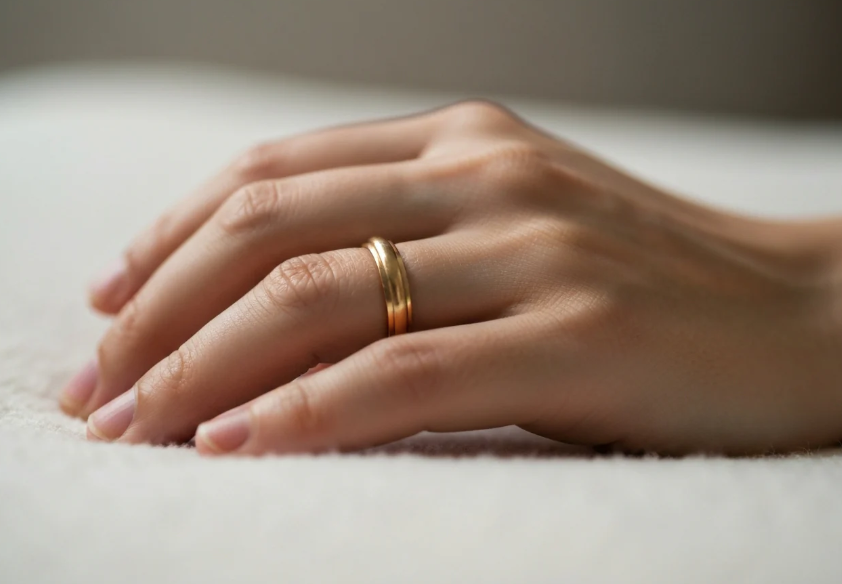
Wedding rings are among the oldest continuous jewelry traditions in human culture, predating modern nations, institutions, and most religious frameworks in one form or another. The circle, without beginning or end, carries a symbolism so universal that it transcends specific cultural contexts. And yet each individual ring is entirely specific. The material chosen, the width of the band, the finish, the presence or absence of stones, all of these decisions reflect something real about the people wearing them.
The current landscape of wedding ring design is richer than it has been in a long time. Traditional yellow gold endures, as it always has, but white gold, rose gold, platinum, titanium, ceramic, and even laboratory-grown diamond options have expanded the palette considerably. Couples today are more likely to spend time discussing and choosing rings together, which itself represents a shift from older traditions where the groom’s band in particular was often treated as an afterthought.
The Craft Behind the Symbol
Understanding what distinguishes a well-made ring from a mass-produced one requires knowing a little about the process. A goldsmith working with recycled gold and carefully sourced diamonds is making choices at every stage: which alloy to use for the precise karat, how to set stones so they are secure over decades of daily wear, what surface treatment to apply and how it will age.
Finnish goldsmithing has a particular reputation in the Nordic jewelry world. The tradition of producing quality rings and jewelry in small workshops, by goldsmiths who work through the entire process rather than specializing in single production steps, produces a different kind of object than industrial manufacture. Each piece carries evidence of the hands that made it, even when the design is minimal.
The use of recycled gold is particularly worth considering from an environmental perspective. Gold mining remains one of the more disruptive forms of resource extraction, and the supply of reclaimed gold, carefully purified, is metallurgically indistinguishable from newly mined metal. The environmental case for choosing recycled gold is significant, and the jewelry made from it is in no way inferior. This is now reflected in some of the Finnish jewelry industry’s best-known certification standards.
The question of conflict-free and responsibly sourced diamonds has similarly moved from niche concern to mainstream consideration. The Kimberley Process, while imperfect, established a framework for traceability that has gradually improved. Working with European diamond suppliers who can document their sourcing provides buyers with a degree of certainty that is increasingly valued. Laboratory-grown diamonds, now available in many jewelry collections, offer a different path to the same end: a visually identical stone with a fully traceable origin.
See also: Smart Home Solutions That Actually Make Life Easier
Choosing a Ring That Lasts a Lifetime
The practical considerations involved in selecting wedding rings are often underestimated by those going through the process for the first time. Ring sizing, for instance, is more variable than most people realize. Finger size fluctuates with temperature, time of day, and body weight changes. The recommendation to measure size at different points in the day, and to size up slightly rather than down, is well-grounded advice.
The width of the band matters both aesthetically and practically. Wider bands feel different on the hand and are sometimes easier to engrave. Narrower bands have their own elegance and tend to work particularly well when stacked with an engagement ring. Many couples planning wedding rings find that trying on multiple widths in person, rather than making a decision based on photographs alone, produces better outcomes.
Surface finish is another consideration that photographs handle poorly. Polished gold has a mirror-like brilliance that shows wear differently than a matte or brushed finish. Some people love the way polished rings develop a living patina over years; others prefer the visual consistency of a brushed surface that hides minor contact marks. Neither is objectively better, but knowing your own preferences before committing is worthwhile.
For those who want something truly unique, the option of commissioning a custom-made ring from a workshop in Finland’s jewelry tradition is increasingly accessible. Starting with a reference image or a general concept, a skilled goldsmith can work with the customer through design iterations to arrive at something that does not exist anywhere else in the world. The process typically takes several weeks and requires a few rounds of communication, but the result is a ring that fits both the finger and the person in a way that a ready-made piece rarely can. Wedding rings in this category have been made in price ranges from a few hundred euros for simple silver designs to tens of thousands for elaborate diamond-set pieces, reflecting the flexibility of the approach.
The Shared Thread: Objects Worth Choosing Carefully
What connects a beautifully designed watch to a carefully chosen wedding band is not really the materials, though both require quality to endure. It is not even the price, since both categories span a wide range. The connection is the quality of attention involved in the choice.
We live surrounded by objects chosen quickly, replaced frequently, and forgotten easily. The watch or ring that takes time to choose, that comes from a maker whose craft you understand and appreciate, that you know will still be with you in twenty years, occupies a completely different position in life. It becomes a reference point, something you look down at and remember.
The Finnish jewelry tradition, represented by companies like Laatukoru, which has been family-owned since its founding in 1972 and now includes both a substantial network of physical stores and an international online presence, reflects this philosophy in how it approaches both its watch selection and its own Silván jewelry production. Buying from a retailer with that kind of continuity means something different from a transaction with a nameless marketplace.
There is also a practical dimension to choosing carefully. Watches from authorized dealers come with manufacturer warranties, genuine service networks, and the assurance that what you are receiving is what it claims to be. Rings made by established goldsmiths come with certificates of material and stone quality. These are not mere paperwork; they are the infrastructure of trust.
Final Thoughts: The Things That Stay
There is a reason that watches and rings appear so frequently in inheritance, in the handing-down from one generation to the next of objects that carry stories within them. A grandfather’s watch, a grandmother’s ring, these are not simply old things; they are connective tissue between lives separated by time.
That quality, the capacity of an object to outlast its first owner and become meaningful to another, depends entirely on how well it was made in the first place. Cheap materials corrode and break. Poorly designed cases fail. But a stainless steel watch with sapphire glass and a sound Swiss movement, serviced at appropriate intervals, can function beautifully for generations. A gold ring with properly set diamonds and a well-considered finish can sit in a jewelry box for decades and emerge looking exactly as it should.
This is the quiet argument for spending more time and care on the objects we wear closest to us. Not because material possessions define a life, but because the right ones, chosen thoughtfully, accompany a life in ways that make it richer.
Whether you are drawn to the clean, integrated-bracelet architecture of a watch that has been beloved since 1978, or you are sitting across a workshop table from a Finnish goldsmith discussing what your perfect ring should look like, the experience is fundamentally the same. You are participating in a tradition of making and choosing that is far older than any individual brand or product line, and that will outlast all of us.
That is worth something. In fact, it is worth quite a lot.
—
About the brands referenced: Tissot PRX watches are available at latukoru.com. Wedding rings and the full jewelry collection are accessible internationally through laatukoru.fi/en.