The current global landscape is shifting beneath our feet, and lately, Pakistan has increasingly become the focus of international attention as it navigates a complex web of economic recovery and regional instability. From mediating high-stakes diplomatic talks to managing the fallout of a volatile oil market, the nation finds itself at a critical crossroads. Staying updated with the latest Pakistan news has become essential for understanding how this South Asian power is balancing its internal fiscal consolidation with the external shocks vibrating through the Middle East. Despite the surrounding chaos, there are signs of structural endurance that suggest the country’s economic foundations are firmer than they appear at first glance.
Fitch Affirms Stability Amid Regional Turbulence
In a significant move on Monday, the global ratings agency Fitch affirmed Pakistan’s long-term foreign-currency issuer default rating at ‘B-’ with a stable outlook. This affirmation serves as a bittersweet victory for the country’s financial managers. On one hand, it validates the progress made on fiscal consolidation and the successful rebuilding of foreign exchange reserves. On the other, it comes at a time when the Pakistan Stock Exchange (PSX) has witnessed a massive sell-off, with the benchmark KSE-100 index plunging over 6,500 points in a single day.
Fitch highlighted that Pakistan’s strict adherence to its International Monetary Fund (IMF) program has been the primary driver of its improved funding capacity. The rebuilt buffers provide a necessary cushion, yet the agency was quick to warn that the country’s high exposure to energy price shocks remains a primary risk. As conflict in the Gulf escalates, potential supply disruptions through the Strait of Hormuz—where Pakistan receives the bulk of its oil from Saudi Arabia and the UAE—could sharply erode these hard-earned reserves.
The Market Reaction and Energy Vulnerability
The domestic financial markets reacted sharply to the news of a failed diplomatic breakthrough and the subsequent US naval move to restrict Iranian shipping. The KSE-100 index fell by nearly 4 percent, closing at roughly 160,591 points. Analysts pointed to a “perfect storm” of investor fears, ranging from surging inflation to the broader uncertainty of the global economy.
With crude oil prices climbing back above the $100 per barrel mark, the pressure on Pakistan’s import bill is immense. The US Navy’s preparation to block ships to and from Iran has created a sense of panic, as the Strait of Hormuz is the world’s most vital chokepoint for oil. For Pakistan, a spike in energy costs doesn’t just mean higher prices at the pump; it threatens to reignite inflation for fiscal 2026, potentially pushing it well above previous projections and forcing the government to implement further spending cuts to contain the fiscal deficit.
Diplomatic Mediation: The Islamabad Talks
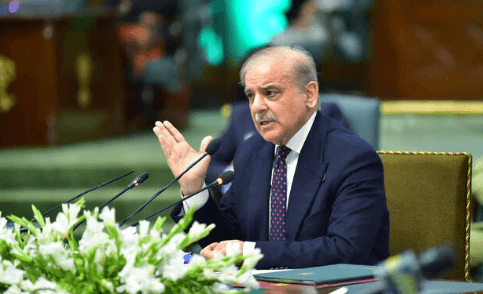
Pakistan’s role in the current crisis has not been limited to economic management. Over the weekend, Islamabad played host to a historic event: the first direct talks between top United States and Iranian officials in decades. Prime Minister Shehbaz Sharif noted that while the talks lasted over 20 hours, they unfortunately failed to produce a comprehensive deal to end the six-week war.
While following world news, it becomes clear that the failure of these talks has immediate consequences for global trade. US President Donald Trump’s subsequent comments, stating he “doesn’t care” if Iran returns to the negotiating table, have added a layer of frost to an already icy diplomatic environment. Pakistan continues to urge both sides to uphold the fragile ceasefire agreed upon on April 8, emphasizing that the global economy simply cannot afford a prolonged disruption of Gulf shipping lanes.
See also: Travel Skin Care Kit: Essential Beauty Products for Every Journey
Maritime Security and Contraband Seizures
Amidst these macro-level concerns, Pakistan is also stepping up its efforts to secure its maritime borders. On the same day as the stock market dip, Pakistani maritime forces intercepted an unidentified vessel in the Arabian Sea, seizing illicit liquor worth an estimated $714,000.
This joint operation involving the Pakistan Navy, the Maritime Security Agency (PMSA), and the Anti-Narcotics Force (ANF) underscores the country’s resolve to maintain order in its territorial waters. While seemingly separate from the geopolitical conflict, such operations are vital for ensuring that smuggling networks do not exploit regional instability. Secured sea lanes are the lifeblood of the Pakistani economy, and the resolve shown by maritime agencies provides a sense of security for legitimate commercial traffic.
In the End
Pakistan finds itself in a delicate balancing act. The affirmation of the ‘B-’ credit rating provides a glimmer of hope that the country’s long-term fiscal path is correct, even as immediate geopolitical tremors threaten to derail that progress. The failure of the US-Iran talks in Islamabad and the subsequent blockade in the Gulf of Oman have placed the nation’s energy security at risk, yet the government’s proactive diplomatic and maritime efforts show a country unwilling to remain a passive bystander. As the global community watches the evolving situation in the Middle East, Pakistan’s ability to maintain its fiscal discipline while navigating these turbulent waters will be the ultimate test of its newfound economic resilience.