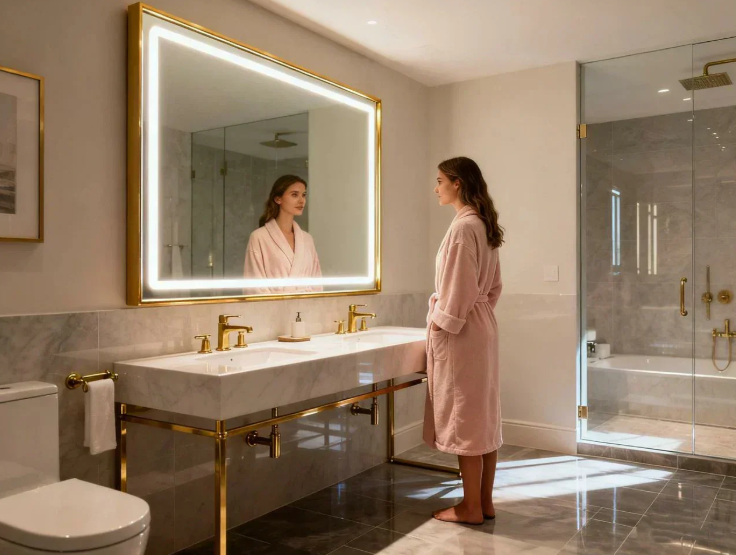
A decorative mirror rarely works in isolation. Its effect depends on what it reflects, how it handles light, and whether it improves the daily function of a room rather than merely filling a wall. In bathrooms, dressing spaces, and contemporary hallways, one design choice has become especially relevant: integrated illumination. This is not simply a styling trend. It responds to a practical need for clearer visibility, cleaner lines, and lighting that feels built into the space instead of added on as an afterthought.
Why lighting changes what a mirror can do
Traditional mirrors depend on surrounding fixtures to do the real work. If the room lighting is poor, the mirror becomes less useful no matter how attractive its frame is. That is why illuminated designs have gained ground. HomeKode’s LED mirror collection presents mirrors with integrated lighting as a way to combine practical illumination with a polished aesthetic, especially in bathrooms, dressing rooms, and hospitality-style interiors. The main value is not novelty. It is control.
Homes & Gardens makes a similar point in its bathroom-mirror advice, emphasizing that lighting around a mirror should be treated as a core design element rather than something to improvise later. Good lighting makes grooming easier, reduces shadows, and improves how a space feels overall. In smaller bathrooms or darker corners, the mirror is no longer only a reflective surface. It becomes part of the room’s lighting strategy.
What makes LED mirrors distinct in modern interiors
HomeKode describes LED mirrors as transformative because they blend illumination and reflection into a single object. The collection page highlights benefits such as energy efficiency, adjustable light quality, even illumination, and the ability to reduce glare and harsh shadows. Its deeper collection text also points to backlit formats that create a softer halo rather than a direct glare, which is especially useful in spaces where comfort matters as much as precision.
This is where LED Mirror fits naturally into current home design. A well-placed illuminated mirror can act as both task lighting and ambient lighting, which reduces the need for extra fixtures competing for attention. In rooms where visual simplicity matters, that is a significant advantage.
Why integrated illumination improves everyday use
The most convincing case for LED mirrors is routine use. HomeKode notes that backlit mirrors reduce harsh shadows and provide clearer, more even illumination for tasks such as makeup application or shaving. That idea aligns with the bathroom-lighting logic discussed by Homes & Gardens, where designers emphasize the need for soft but effective light around the face.
In practice, this means a better daily experience. A mirror that lights the face evenly is more useful than one that relies on overhead fixtures casting shadows from above. It is also easier to integrate into minimalist spaces where wall clutter quickly becomes visible. Instead of adding separate sconces, users can consolidate design and function into one element.
See also: Smart Home Solutions That Actually Make Life Easier
How LED mirrors support a cleaner aesthetic
Integrated lighting also changes the visual language of a room. HomeKode’s collection frames LED mirrors as part of a modern, refined interior vocabulary, particularly in Dubai settings where contemporary finishes, clean geometry, and polished surfaces are common. The illuminated edge can create an almost floating effect, giving the wall more depth and the room more atmosphere.
Architectural Digest has often emphasized that mirrors widen and brighten spaces by redirecting light. LED formats extend that logic. They do not only bounce existing light; they contribute controlled light of their own. That makes them especially effective in spaces where natural light is limited or inconsistent.
Why LED mirrors are more than a passing trend
They solve several problems at once. They improve visibility, reduce fixture clutter, support a more streamlined design language, and often bring energy-efficient lighting into a part of the home used every day. That combination is why they have moved from niche item to mainstream design choice.
A mirror becomes more valuable when it improves the room whether the light is already good or not. LED mirrors do exactly that. They make the reflective surface more useful, the room more cohesive, and the daily routine more comfortable.