Key Takeaways
- Clinical trials are essential for developing new medical treatments and ensuring their safety and efficacy.
- Advancements in technology, such as artificial intelligence, are revolutionizing the conduct of clinical trials.
- Decentralized clinical trials are increasing accessibility for diverse populations.
- Ensuring diversity in clinical trials leads to more effective and inclusive healthcare solutions.
Table of Contents
- The Importance of Clinical Trials
- Technological Advancements in Clinical Trials
- The Rise of Decentralized Clinical Trials
- Ensuring Diversity in Clinical Trials
- Regulatory Changes and Their Impact
- Challenges and Solutions in Modern Clinical Trials
- Future Directions in Clinical Research
- Conclusion
Clinical trials are at the heart of modern healthcare innovation, guiding the discovery and validation of new treatments that improve patient outcomes worldwide. As medicine becomes more advanced, these trials are no longer limited to traditional laboratory settings but increasingly incorporate digital tools, real-time data, and patient-centered approaches. From drug development to preventive therapies, clinical research plays a crucial role in ensuring safety, effectiveness, and accessibility, shaping how future healthcare systems will evolve and respond to global health challenges.
At the foundation of this process, the phase 1 clinical trial serves as the first step in evaluating new treatments in humans, focusing on safety, dosage, and initial biological response. These early-stage studies determine whether a therapy can safely progress to later phases, helping researchers refine protocols and identify risks. By filtering promising candidates early, phase 1 trials strengthen the clinical pipeline and increase the likelihood that safe medical innovations reach patients.
The Importance of Clinical Trials
Clinical trials are fundamental to advancing healthcare because they provide the scientific evidence needed to approve new drugs, devices, and medical procedures. Without controlled trials, the safety and effectiveness of innovative therapies could not be verified with confidence. Every modern treatment for conditions like cancer, diabetes, and chronic pain, among others, has gone through this staged evaluation process, beginning with early-phase studies and extending to large-scale population assessments.
These studies also shape the future direction of research, help set treatment protocols, and significantly reduce the risks of ineffective or harmful interventions entering the market. As healthcare becomes more complex, clinical trials remain the most reliable method for testing the effects of new interventions across varied patient groups. Their outcomes directly inform guidelines used by doctors, insurers, and policymakers worldwide.
Technological Advancements in Clinical Trials
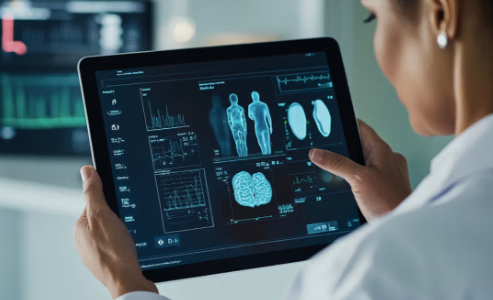
Artificial intelligence and other data-driven technologies are quickly changing how clinical trials are conducted and monitored. The US Food and Drug Administration (FDA) has begun piloting programs that use AI to track and analyze real-time data streams from trial sites. This approach has already shown promise in reducing study duration by up to 40 percent, enabling faster access to new treatments for those in need. Real-time feedback also reduces errors, optimizes resource allocation, and enhances patient safety throughout the course of clinical investigation.
The application of new technology does not stop there. Cloud-based platforms, wearable health monitors, and AI-enabled algorithms are also streamlining protocol adherence, patient follow-up, and analysis of complex biomarker datasets. These advancements are enabling more flexible trial designs that can adjust in real time to new findings, leading to truly dynamic, patient-focused research.
The Rise of Decentralized Clinical Trials
Decentralized clinical trials (DCTs) are expanding access by allowing participants to take part in studies from their homes or local clinics. This shift is made possible by telehealth technology, mobile devices, and secure data platforms, which reduce the burdens of travel and time for participants. Leading medical research centers are heavily investing in remote and hybrid models that seamlessly integrate trial participation into everyday life and standard care routines. As remote access improves, DCTs are poised to further democratize clinical research, ensuring more equitable opportunities to participate regardless of location or mobility.
Ensuring Diversity in Clinical Trials
A trial population that reflects real-world diversity is critical for understanding how new treatments perform across age, gender, and ethnic backgrounds. Historically, marginalized communities have been underrepresented, which limits the generalizability of study results and leaves some populations at higher risk for poor health outcomes. Today, there is renewed emphasis on overcoming these barriers. For example, Walgreens has launched a dedicated clinical trials business intended to make study enrollment more accessible for people of all backgrounds, with the goal of producing truly inclusive medical data.
Regulatory Changes and Their Impact
Governments and oversight agencies are working to keep pace with innovation by updating rules and introducing pilot programs that encourage smarter, faster implementation of studies. The FDA’s current initiatives with leading pharmaceutical giants reflect a broader global strategy to bring therapies to market more efficiently without sacrificing patient safety or study integrity. Real-time tracking, adaptive trial protocols, and collaboration across regulatory boundaries are now standard practice for accelerating clinical breakthroughs and upholding public trust.
Challenges and Solutions in Modern Clinical Trials
Recruiting, engaging, and retaining participants remain persistent obstacles, especially in rare disease and pediatric studies. Data management, security, and transparency are also heightened concerns in an era of rapid digital expansion. Nevertheless, solutions are emerging. The National Institutes of Health has unveiled TrialGPT, a generative AI tool designed to match volunteers to clinical trials more quickly and accurately, minimizing delays and inefficiencies in recruitment. In addition, ongoing advocacy for clear, patient-friendly consent processes and open-access results platforms enhances participation and speeds up the development timeline.
Future Directions in Clinical Research
The next era of clinical research will be defined by adaptive trial methods, increasing use of real-time analytics, and greater involvement of patients and communities from start to finish. These changes are expected to accelerate drug approval pathways, reduce costs, and strengthen the evidence base supporting personalized and precision medicine initiatives. Technologies such as AI, telemedicine, and secure mobile monitoring tools are elevating the efficiency and inclusivity of clinical studies, resulting in wider-reaching, longer-lasting improvements in public health.
Conclusion
As healthcare rapidly evolves, clinical trials will remain at the heart of transformative progress, serving as a bridge between scientific discovery and improved patient care. By embracing new technologies and prioritizing diversity, today’s research community is rising to the challenge of delivering high-impact solutions for people everywhere. The continuing evolution of clinical trial design and execution promises safer, faster, and more equitable outcomes for future generations.